Wheaton Epoxy Flooring installs industrial epoxy flooring in Wheaton, IL, serving surrounding cities including Winfield, Warrenville, Hinsdale, Wood Dale and Bensenville, with more than 20 years spent preparing and coating concrete. Industrial floors carry forklifts, pallet jacks, dropped parts, oil, fuel and cleaning chemicals, and they have to keep working through all of it.
Wheaton itself is mostly residential, institutional and commercial, so much of this work happens in warehouses, fleet garages, public works and maintenance facilities, and shops across the surrounding area. What these floors share is heavy use, and a system that is chosen for the actual equipment and chemicals on site rather than a generic spec.
Every industrial proposal names the product line, the number of coats and the finished thickness, along with the preparation method and the repairs. Slabs are prepared mechanically, usually by shot blasting in open areas and diamond grinding at edges, and moisture testing is part of the written scope.
Preparing Industrial Slabs
Shot Blasting Large Floors
On large, open industrial floors, shot blasting is fast and gives an even, deep profile that thick systems need to anchor. Steel shot is fired at the slab, then recovered with the dust by a magnetic separator and vacuum. Edges, corners and areas around racking are finished with diamond grinders so the profile stays consistent wall to wall.
Removing Oil and Contamination
Industrial slabs often carry years of oil, hydraulic fluid and fuel soaked into the concrete. A coating will not bond to contaminated concrete, so stained areas are degreased and ground or blasted until clean concrete shows. Areas that keep wicking oil back are flagged and treated before any coating goes down.
This step is where many industrial coatings fail. A floor that looked clean on the surface can peel within months if oil was left in the top of the slab, so we would rather spend the extra time here than come back later.
Repairing Joints and Damage
Forklift and pallet-jack wheels pound control joints thousands of times, breaking down the edges. We cut back damaged edges, rebuild them with repair mortar and fill joints with a semi-rigid filler that supports wheels while allowing slight movement. Spalls, holes and pitting are filled and ground flush.
Where a section of slab has settled or broken up, we flag it plainly. A coating cannot hold together concrete that is moving under load, and that area may need concrete work before any coating is worth installing.
Industrial Coating Systems
High-Build Epoxy
High-build 100% solids epoxy coatings provide a thick, hard surface that resists abrasion and many chemicals. They suit storage areas, assembly spaces and light to moderate traffic. Multiple coats build the thickness needed, and the topcoat is selected for the specific exposures in the area.
Light colors such as gray or tan are common in industrial spaces because they reflect light and make leaks, dropped parts and debris easy to see. A brighter floor can make an aisle feel safer and cleaner, and it shows quickly when a machine starts to drip.
Epoxy Mortar and Slurry Systems
For heavy impact, steel wheels and severe wear, trowel-applied epoxy mortars or self-leveling slurries with aggregate build much thicker layers. They can also resurface badly worn concrete. These systems cost more but last far longer in the most demanding areas of a facility.
Many facilities use more than one system. A mortar can go down in a loading area or under a press while the rest of the floor gets a high-build coating, so the heavier, costlier system is only installed where the wear justifies it. The proposal maps each system to its area.
Urethane Cement for Heat and Washdown
Where floors see hot water, steam cleaning or thermal shock, urethane cement performs better than epoxy. It tolerates heat and more slab moisture, which makes it a common choice for food processing, washdown bays and areas near hot equipment.
Chemical-Resistant Topcoats
The topcoat is the layer that meets spills first. We review the chemicals, oils and cleaners your operation uses and choose a topcoat rated for them. Some areas, such as battery charging stations or chemical storage, may need a specialized lining rather than a general coating.
Safety and Layout
Slip Resistance
Industrial floors are often wet, oily or dusty. Quartz or aluminum oxide aggregate broadcast into the coating, or texture additives in the topcoat, set the level of grip. We match texture to the cleaning method, since a very coarse surface can be hard to clean and a smooth one can be dangerous when wet.
Texture can also vary across a single floor. Wash bays, ramps and entry points may get a coarser finish, while storage aisles where carts roll get a finer one. Grip is set by the broadcast and topcoat we specify rather than promised as a general claim.
Aisle Lines, Walkways and Zones
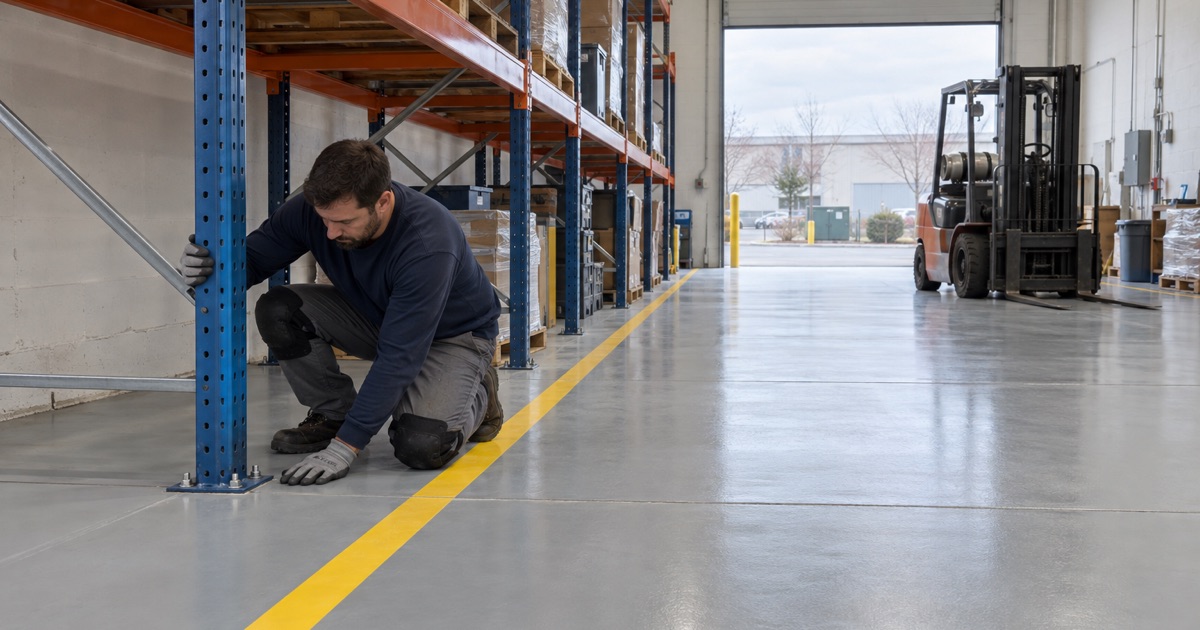
Safety striping, pedestrian walkways, forklift lanes and hazard zones can be built into the coating in contrasting colors. Lines coated into the system last much longer than paint on bare concrete. We plan the layout with your team so it matches traffic patterns and safety rules.
Working Around Operations
Phased Installation
Facilities rarely shut down completely. We phase work so parts of the floor stay in use while others are prepared and coated, and schedule around shifts, weekends and planned shutdowns. Fast-curing topcoats shorten the time each section is out of service.
Racking, equipment and stored goods have to move for each phase, so the sequence is planned with your team in advance. A clear plan avoids moving the same inventory twice.
Dust, VOCs and Air Quality
Shot blasting and grinding dust is captured at the machine. The Illinois VOC limits for industrial maintenance and floor coatings bind the person applying the product, so every coating we use is selected inside those limits. Ventilation is planned so occupied areas are protected during installation.
Handover and Maintenance
At handover, your team receives the product data, cure schedule and maintenance guidance. Industrial floors last longest when cleaned with compatible products and when worn areas are recoated before they wear through to concrete.
- 20+ Years in Business
- Moisture Tested Before Pricing
- Free Written Estimates