Epoxy Flooring in Wheaton, IL, Built on a Ground and Tested Slab

Garage, basement and commercial floor coatings with moisture testing in the written scope and the product, coat count and thickness named in every proposal.

Wheaton Epoxy Flooring has spent more than 20 years installing epoxy flooring in Wheaton, IL, from garage floors and basement coatings to polished concrete, flake and metallic systems, and commercial floors for clinics, offices and kitchens. Every job starts with the slab rather than the color chart, because a coating is only as good as the concrete it is bonded to.

That means the floor is opened with a diamond grinder or a shot blaster, tested for moisture as part of the written scope and checked for cracks, spalls and old coatings before a price is final. When a slab should be repaired or replaced before it is coated, we tell you so before anything is sold.

The result is a proposal you can hold the finished floor against: the product line, the number of coats and the finished thickness are all named in writing. Homeowners get the same paperwork whether the job is a one-car garage or a full basement, and businesses get a schedule built around their hours.

Get Your Free Quote

Fast response • No obligation

So we can reach you about your request.

So we can send you a confirmation after you submit this inquiry form.

  • 20+ Years in Business
  • Moisture Tested Before Pricing
  • Free Written Estimates

What we do

Our Services

Epoxy flooring for Wheaton garages, basements and businesses

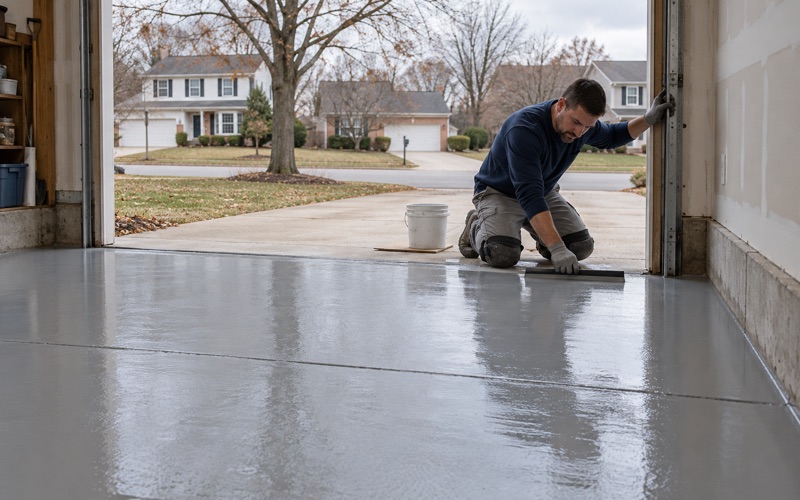
An epoxy base coat cut in along the overhead door threshold of a Wheaton colonial's attached garage.

Epoxy Garage Floor

Ground, moisture-tested epoxy garage floors in Wheaton with flake or solid finishes and topcoats made for road salt, brine and hot tires.

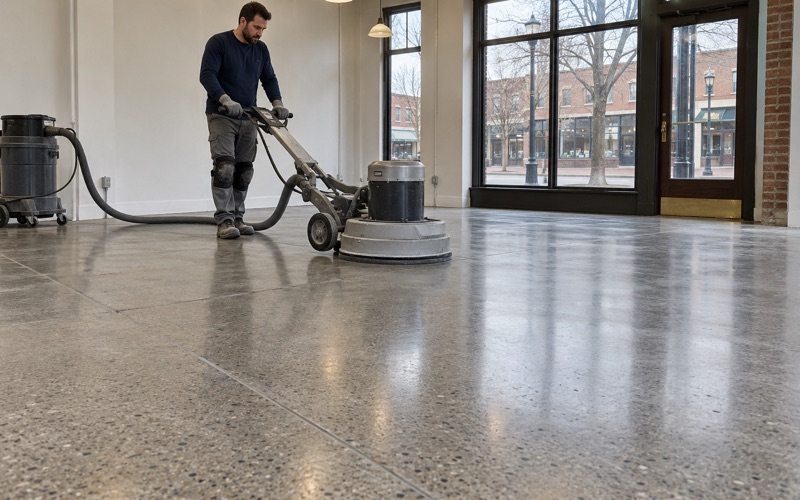
A satin polished concrete floor showing fine aggregate in a renovated brick storefront in downtown Wheaton.

Polished Concrete Floors

Ground, densified and polished concrete floors in Wheaton, from a light cream finish to fully exposed aggregate, for homes and businesses.

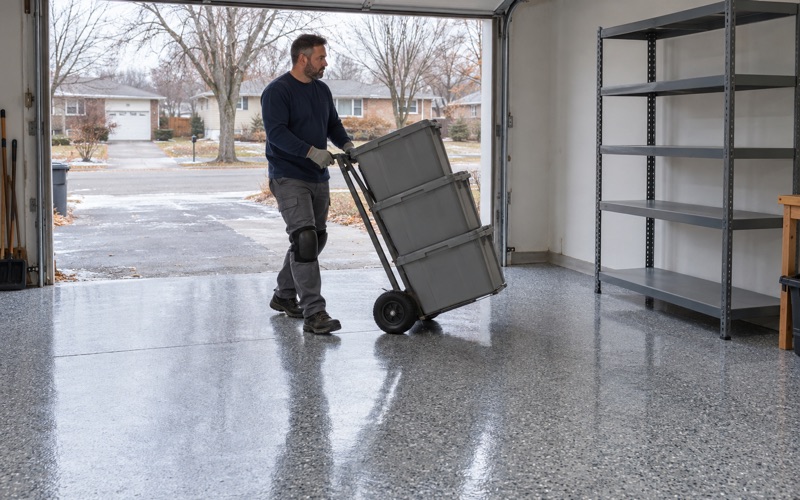
Storage bins wheeled back onto a same-day polyaspartic flake floor in a Wheaton raised-ranch garage on a cold afternoon.

Polyaspartic Floor Coating

Fast-curing, UV-stable polyaspartic floor coatings in Wheaton for garages, basements and commercial floors, installed over a ground slab.

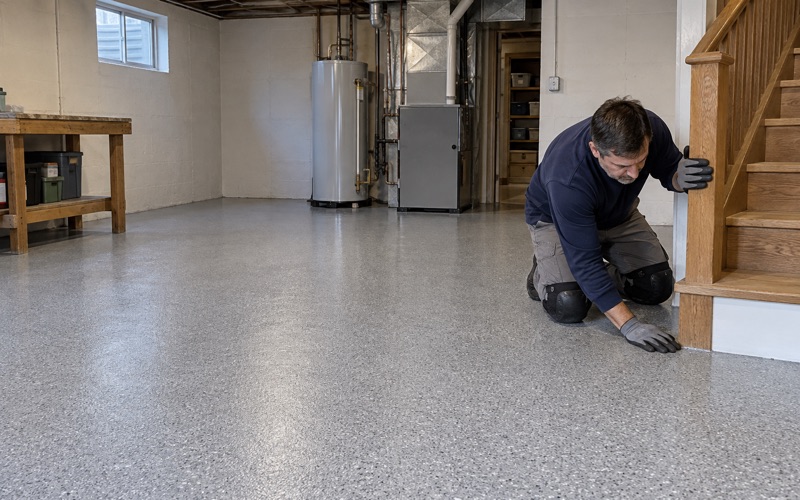
A finished light gray epoxy basement floor in a Wheaton split-level, coated right to the foot of the stair.

Basement Floor Epoxy

Moisture-tested basement floor epoxy in Wheaton for laundry rooms, workshops, gyms and finished lower levels, installed over a ground slab.

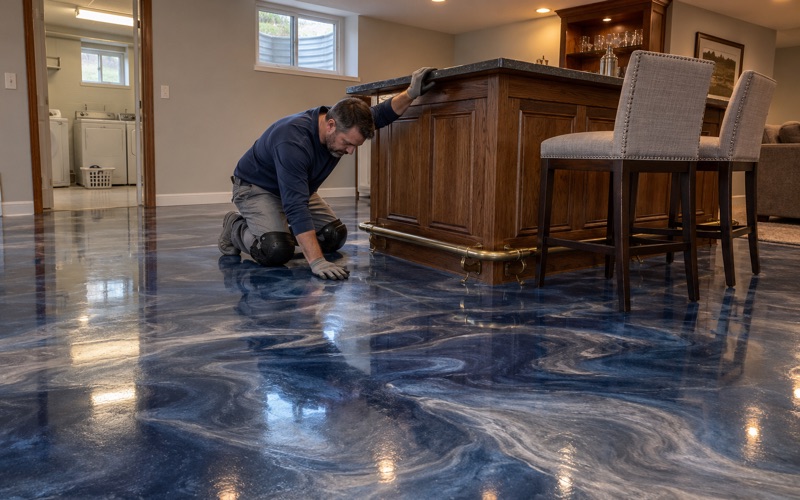
A blue and silver metallic epoxy floor around the home bar of a finished basement in a Wheaton colonial.

Metallic Epoxy Floor

Marbled metallic epoxy floors in Wheaton for basements, garages, showrooms and offices, poured over a flat, ground slab and sealed to last.

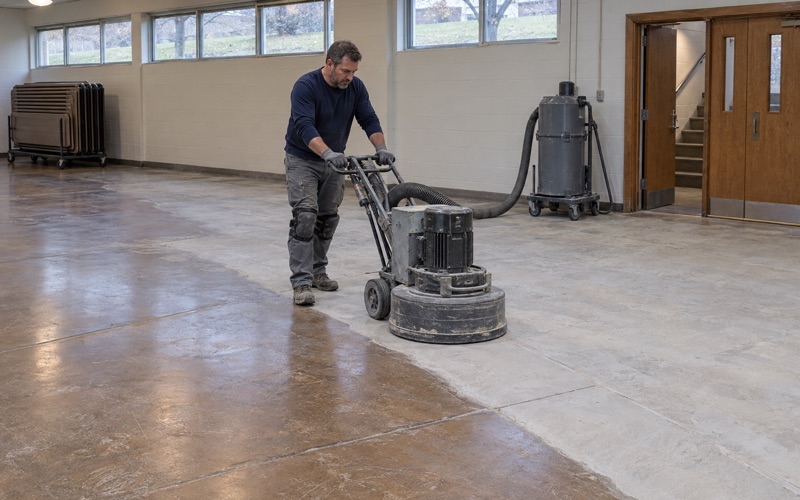
A planetary grinder opening an old sealed floor in a Wheaton church fellowship hall, dust drawn into the extractor.

Concrete Grinding

Diamond grinding and shot blasting in Wheaton to strip coatings and glue, flatten high spots and profile concrete for a lasting new floor.

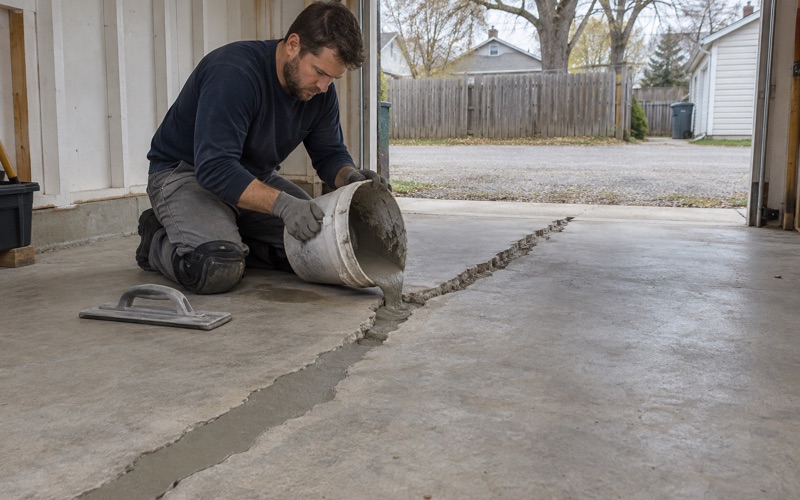
A chased crack in a Wheaton garage slab being filled with repair mortar before the floor is ground and coated.

Concrete Floor Repair

Crack, spall, joint and salt-damage repair for concrete floors in Wheaton, with an honest call when a slab needs replacing instead.

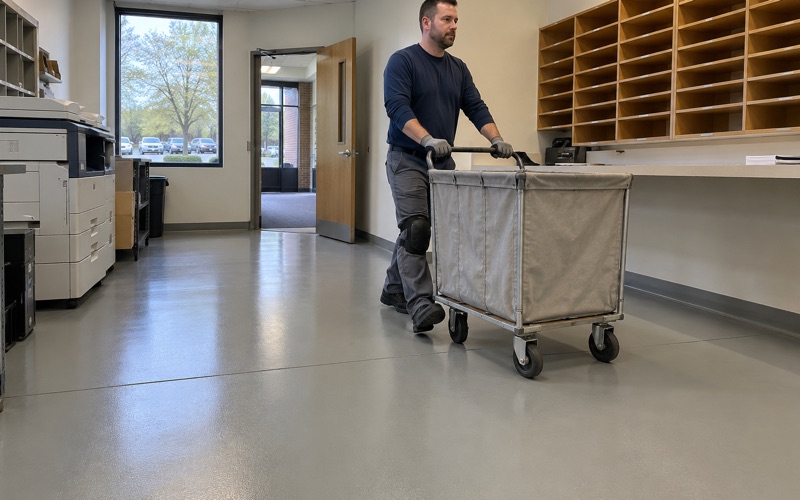
A seamless high-build resin floor in the mailroom of a Wheaton corporate office, a mail cart rolled across it.

Commercial Epoxy Flooring

Seamless commercial epoxy floors in Wheaton for clinics, offices, schools, churches, gyms and shops, installed nights and weekends when needed.

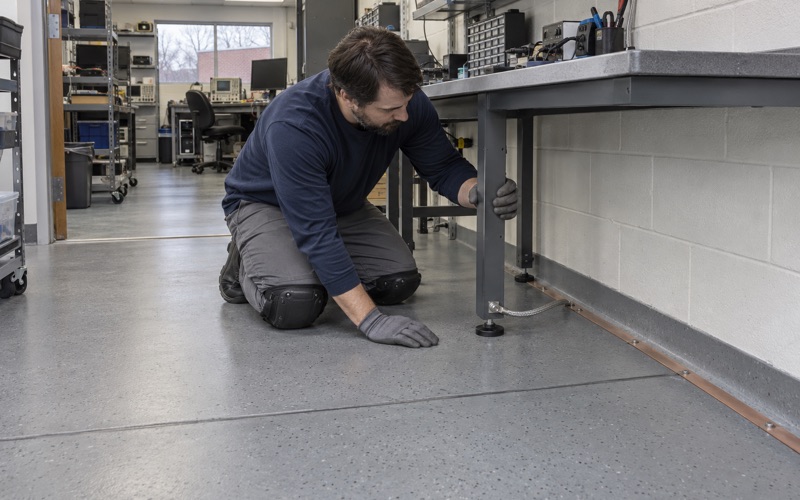
A static-dissipative floor with a copper grounding strip under an electronics repair bench in a Wheaton flex building.

Esd Flooring

Static-dissipative and conductive epoxy ESD floors in Wheaton for electronics, labs, server rooms and assembly areas, grounded and tested.

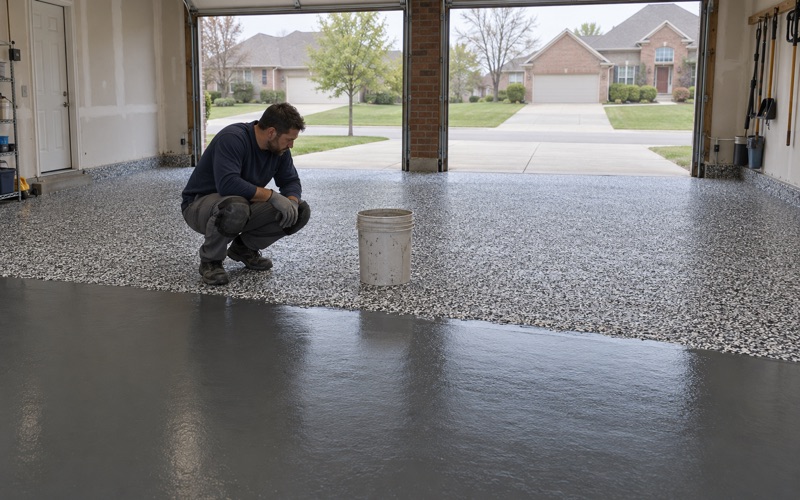
A dense black, white and gray flake broadcast settled on a three-car garage floor at a 1990s Wheaton home.

Flake Epoxy Floor

Vinyl flake epoxy floors in Wheaton in dozens of blends and chip sizes, built over a ground slab and sealed with a durable clear topcoat.

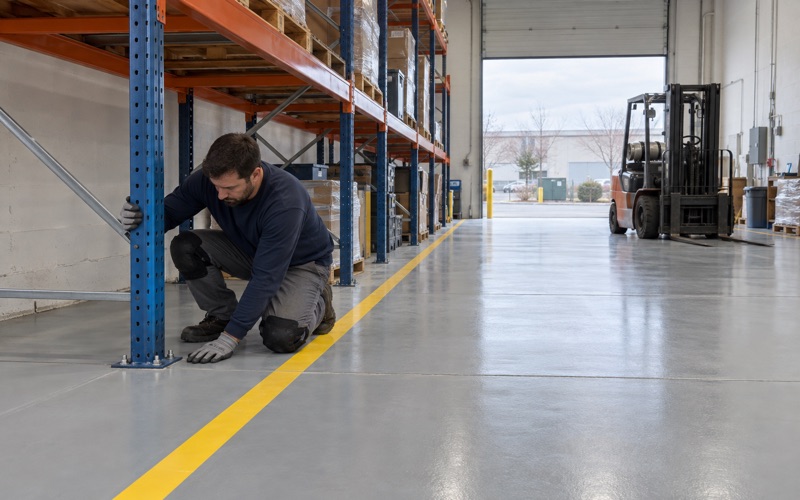
A heavy-build epoxy floor with yellow aisle lines in a Wheaton light industrial flex bay, pallet racking bolted down.

Industrial Epoxy Flooring

Heavy-duty industrial epoxy floors in Wheaton for warehouses, fleet shops and maintenance bays, built thick for forklifts and chemicals.

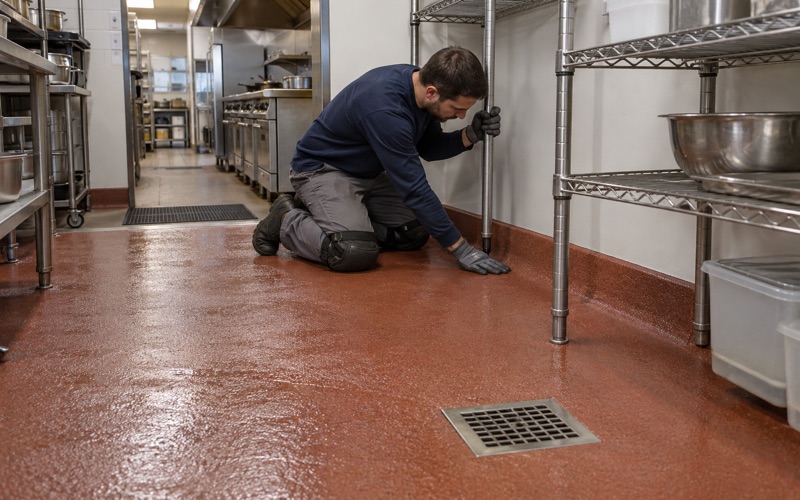
A slip-resistant urethane cement floor with a 3/8-inch-radius cove under the walk-in shelving of a downtown Wheaton restaurant kitchen.

Commercial Kitchen Flooring

Seamless, slip-resistant commercial kitchen floors in Wheaton with integral coved bases, built for heat, grease and daily washdown.

Experience Behind Every Wheaton Floor

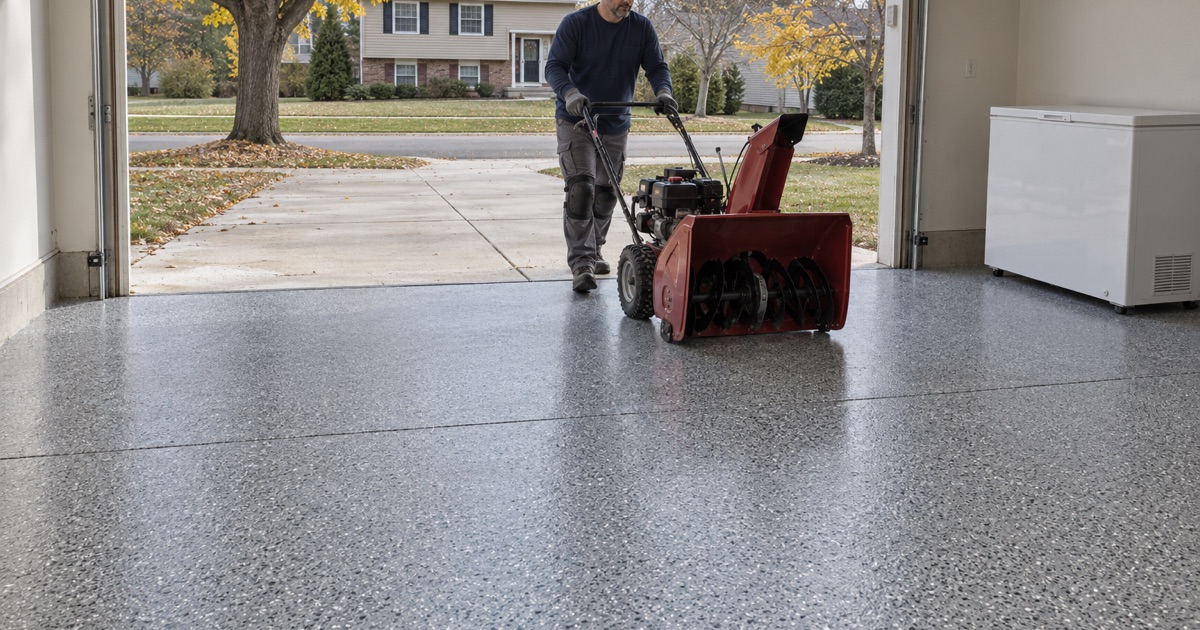
A finished gray, black and white flake floor in the attached garage of a 1980s Wheaton colonial, a snow blower rolled back inside for winter.

More Than 20 Years Coating Concrete

We have been in business for more than 20 years, long enough to see what happens to a floor several winters after it goes down. That history is why surface preparation, moisture testing and honest warranty talk lead every conversation rather than sitting in the fine print.

Why Choose Wheaton Epoxy Flooring

Ground, Never Etched

No slab is coated after an acid wash alone, because etching leaves a weak, uneven profile that lets a coating lift. Every floor is opened with a diamond grinder or shot blaster to a measured concrete surface profile, so the epoxy grips sound concrete rather than the laitance a careless crew leaves behind.

Moisture Tested Before Pricing

Wheaton’s 2024 residential code still lets a garage slab go without a vapor retarder, and much of the city sits on poorly drained glacial till. A moisture test is written into the scope before the price is final, so a damp slab gets the right primer rather than a coating that blisters the first spring.

Quotes You Can Check

Every proposal names the product line, the number of coats and the finished thickness. Comparing quotes then means comparing materials, so a thin single coat cannot hide behind the same price as a full broadcast system the way it can on a one-line estimate.

Built for Salt and Brine

Road brine and rock salt ride into Wheaton garages on tires from late fall to spring. Garage systems are chosen and topcoated to hold up to those deicers, so a floor keeps its finish through the salt season rather than turning chalky and stained by March.

Cured to Conditions

Cure schedules follow slab temperature and the dew point spread at the surface, not the calendar. An unheated garage in a deep cold snap is told to wait, so the coating cures hard rather than going down on a cold slab where amine blush and a soft film are the usual outcome.

Paperwork Before Grinding

Home jobs over the Illinois threshold get a written contract and the Home Repair: Know Your Consumer Rights pamphlet before the first pass of the grinder. City of Wheaton registration and permit questions are checked before scheduling, so the crew never shows up to a job that should have been cleared first.

The Garage Floor, Start to Finish

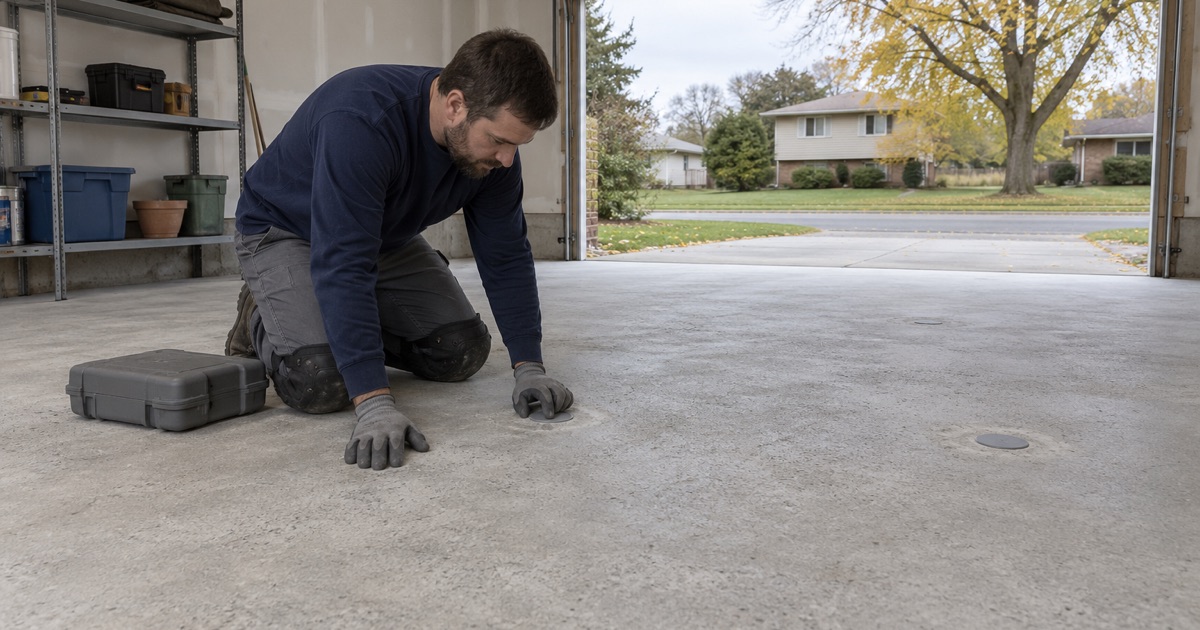
Moisture probes capped in a freshly ground garage slab in Wheaton, read before any coating goes down.

How an Epoxy Garage Floor Job Runs

A garage job starts with a slab check: moisture test, crack and spall map and a look at any old coating. Then the floor is ground and vacuumed, repairs are filled and leveled, and the base coat, broadcast and topcoat go down in sequence. You park on it once the product’s cure schedule says the film is ready at that day’s temperature.

Attached Garages on 1970s and 1980s Houses

Roughly half of Wheaton’s homes were built in the 1970s and 1980s, and many have a garage sharing a wall and a door with the house. We grind with vacuum capture at the machine, seal off the house door and pick coatings inside the Illinois VOC limits, so dust and odor stay in the garage rather than drifting into the kitchen.

Detached Garage Coating Through the Winter

A detached garage with no heat follows the outdoor temperature closely, and its slab can stay cold for weeks. We plan these jobs around a stretch of mild weather or temporary heat that holds the slab in the product’s range, because a coating applied to a frozen floor never reaches full hardness.

Garage Slabs Without a Vapor Retarder

Wheaton adopted the 2024 International Residential Code by Ordinance O-2025-04 and left section R506 alone, so the exception in R506.2.3 that lets a garage slab skip a vapor retarder appears to stand. Moisture from the ground can therefore rise through the slab freely, which is why the test comes before the system is chosen.

Garage Moisture Testing Methods

Depending on the slab, we use an ASTM D4263 plastic sheet test as a quick screen, ASTM F1869 calcium chloride kits to measure vapor emission rate, or ASTM F2170 in-situ relative humidity probes drilled into the concrete. The numbers are compared against the coating maker’s limits and ASTM F710 guidance, and a high reading changes the primer.

Cracks, Spalls and Pitting in the Garage

Hairline cracks, spalled edges and salt pitting are mapped before grinding and filled with a repair compound that bonds with the coating. When a slab has heaved, broken into loose pieces or keeps moving, we say plainly that it needs replacement first, since a coating over a failing slab only hides the problem for a season.

What Brine and Rock Salt Do to Bare Concrete

Calcium chloride and rock salt carried in on tires soak into bare concrete, recrystallize as the floor dries and break the surface apart from within. Over a few winters that shows up as scaling and pitting near the door. A sealed, coated floor keeps the salt on top, where it can be squeegeed out instead of soaking in.

Cold-Weather Garage Coating

The Wheaton 3 SE weather station averages 128.2 nights a year at or below 32 degrees, with the median last spring freeze on April 27. Epoxy cures slowly or not at all on a cold slab, so an unheated garage in deep winter is booked for spring rather than coated in conditions the product cannot handle.

Hot Tire Pickup and Thin Coatings

A tire coming off a warm drive softens a thin coating and, as it cools, pulls the film away from the concrete. That is hot tire pickup, and it is the most common way a bargain floor fails. A ground slab, a 100% solids epoxy base and a hard polyaspartic topcoat give the floor enough thickness and bond to resist it.

Store-Bought Kits Versus Professional Systems

A hardware-store kit is usually a thin water-based epoxy over an acid-etched slab, and it can look good for a while. A professional system starts with diamond grinding, builds several coats to a stated thickness and finishes with a wear-resistant topcoat, which is the difference between a coating that peels and one that keeps its bond.

Epoxy Garage Floor Cost Factors

The price follows square footage, slab condition, the system chosen and the season. Removing an old coating, filling deep spalls or adding a moisture-mitigation primer each adds cost, while a solid color coat costs less than a full flake broadcast. Every one of those choices is itemized so you can compare quotes line by line.

Basements, Sump Pits and Damp Slabs

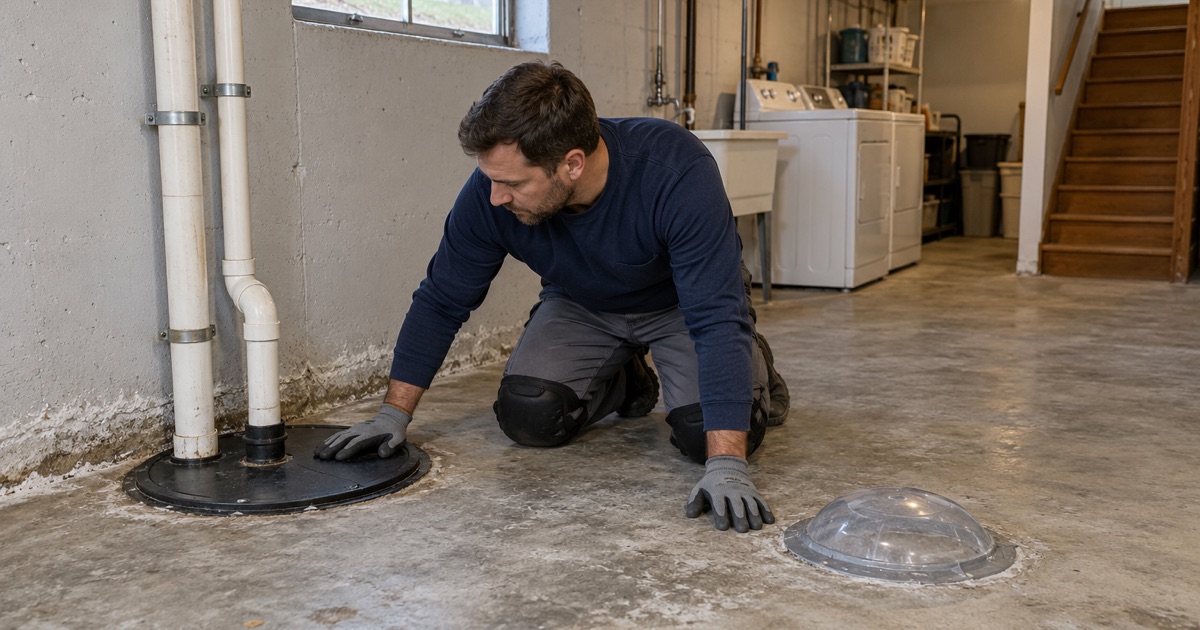
A taped plastic dome moisture test on a bare Wheaton basement slab beside the sealed lid of an ejector pump basin.

Basement Floor Epoxy and the Moisture Question

A basement slab sits in the ground, and the first question is how much moisture is coming through it. We read the floor for past water, test it and only then pick a system. A floor that tests dry can take a standard epoxy, while a damp one needs a primer designed to hold back vapor.

Removing Paint, Patching and Tile Glue

Many basement floors carry decades of paint, patch compound and black tile adhesive. All of it has to come off, because a new coating bonds only as well as the weakest layer under it. We grind or shot blast down to sound concrete, which also reveals any cracks the old layers were hiding.

Sump Pits, Ejector Pumps and Floor Drains

A coated basement floor has to meet sump pits, ejector pump basins and floor drains cleanly. We work around each opening, keep pit lids and drain grates serviceable and slope nothing toward a wall. The coating stops at the edge of the equipment, so a plumber can still reach it without cutting into the floor.

Wheaton’s Drain Rerouting Program Comes First

The City of Wheaton’s Residential Sewer Backup Prevention Program helps residents reroute basement-level sanitary drains to an ejector pump, reimbursing 75 percent of qualifying costs up to 8,000 dollars. If that plumbing work is planned, it should happen before a new floor goes down, since it usually means cutting the slab.

Coating After a Basement Takes on Water

After a backup or seepage event, the floor needs cleanup, disinfection and time to dry before it is tested. We will not coat a slab that is still giving off moisture from the last event. Once the source is fixed and the readings are within range, the floor can be prepared and coated.

Efflorescence on the Basement Floor

White powder on a basement floor is efflorescence, salts carried up by moisture and left behind when the water evaporates. It tells you water is moving through the slab. We remove it, find out how active that moisture is and choose a primer accordingly, since a coating over live efflorescence will lose its bond.

Moisture-Mitigation Primer for Damp Slabs

When testing shows vapor emission or relative humidity above what a standard epoxy tolerates, a moisture-mitigation primer goes down first. It is a dense, penetrating layer designed to hold back vapor so the coats above it stay bonded. It costs more, but it costs less than redoing a blistered floor.

Laundry Rooms, Workshops and Home Gyms

A coated basement floor handles detergent spills, sawdust and dropped tools, and it cleans with a mop instead of a scrub brush. For home gyms we can add texture and recommend rubber mats under heavy racks. Laundry areas get a seamless surface so drips from the machine do not soak into bare concrete.

Warranty Exclusions for Moisture and Hydrostatic Pressure

Nearly every coating warranty excludes damage caused by moisture vapor transmission and hydrostatic pressure from beneath the slab. We explain that before the job is sold, along with any other exclusions, so you know exactly what is covered and why the moisture test matters so much.

Floor Coatings Are Not Radon Mitigation or Waterproofing

A floor coating does not reduce radon, and in Illinois radon mitigation is licensed work overseen by IEMA. It also does not waterproof a basement or stop seepage and sewer backup. We never sell a coating as either, and we point you to the right trade when testing shows you need one.

Color, Flake and Finish

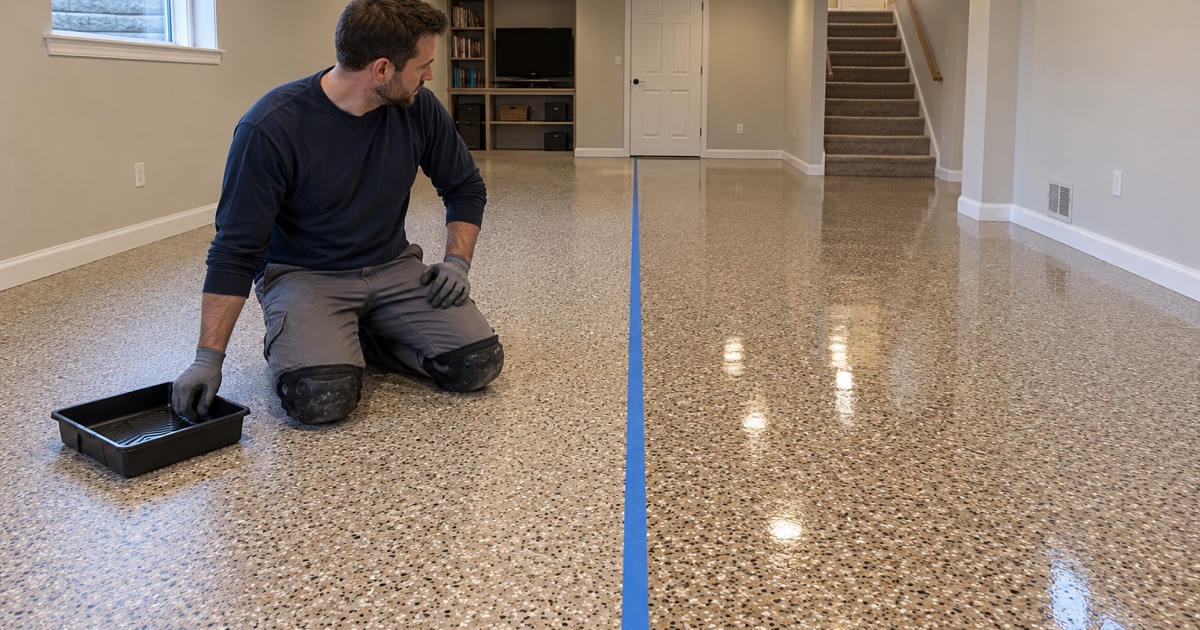
Two topcoat sheens side by side over one tan and brown flake floor in a Wheaton basement rec room, satin on one half and gloss on the other.

Vinyl Flake Blends and Chip Sizes

Vinyl flake is broadcast into a wet base coat and locked in with a clear topcoat. Blend and chip size change the look: large chips read as a bold speckle, small chips blend into a granite-like texture, and a full broadcast hides dust and minor slab flaws far better than a light scatter.

Metallic Epoxy Installation

Metallic epoxy uses pigments that move as the coating is worked, giving a marbled, three-dimensional look. It takes a flat, well-prepared slab and an installer who manipulates the pattern before the material sets. We show you how the effect varies from floor to floor, because no two metallic installations come out the same.

Polished Concrete and Aggregate Exposure

Polished concrete is ground in stages, hardened with a lithium silicate densifier and polished to a chosen sheen. How deep the first grind goes decides how much stone shows, from a light cream finish to fully exposed aggregate. We test a small area first so you can see what your particular slab reveals.

Choosing Gloss, Satin or Matte

High gloss looks sharp but shows dust, scuffs and tire marks quickly. Satin and matte topcoats hide everyday wear better and are easier to live with in a working garage or busy hallway. We help match the sheen to how the space is used rather than how it photographs.

Quartz Broadcast Floors

Quartz aggregate is broadcast into the epoxy, then sealed, giving color and grip in a single system. It is a common choice for kitchens, locker rooms and ramps where traction matters. The size of the quartz and the number of topcoats set how textured the finished surface feels underfoot.

Solid Color Coatings

A single solid color is the simplest and least costly finish, and it is the right call for utility rooms, storage spaces and areas that will be covered by equipment. It still gets the full grind and moisture testing. What it gives up is the way flake and quartz hide dust and small imperfections.

Ultraviolet Exposure and Ambering

Standard epoxy yellows, or ambers, when exposed to sunlight through a garage door or window. Where a floor sees daylight, we finish with a polyaspartic or polyurea topcoat that resists ultraviolet light, so the color you chose stays true instead of turning amber along the doorway.

Saw-Cut Lines, Borders and Logos

Decorative saw cuts can echo a tile pattern, frame a border or follow existing control joints. Logos and color bands can be masked into the coating for a business entrance or a home gym. We lay these out on the slab before work begins so the design fits the room.

Clinics, Offices, Kitchens and Public Buildings

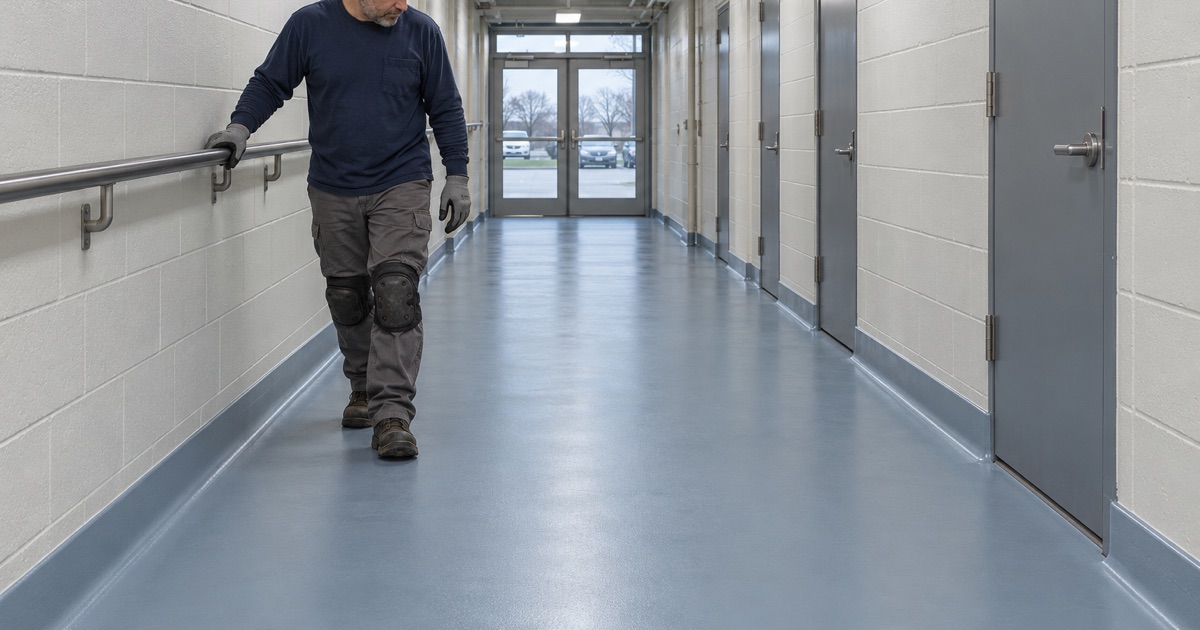
A seamless, coved resin floor in the lower-level corridor of a Wheaton public building, the cove running unbroken past each doorway.

Commercial Floor Projects Versus Home Jobs

Commercial floors carry heavier traffic, stricter cleaning and often a health or building review. They also involve tenants, managers and schedules that a home job does not. We plan sequencing, ventilation and cure time around the business, and we document the system so facility staff know how to maintain it.

Medical Office and Clinic Floors

Clinics, medical offices and rehab spaces are mopped with disinfectants every day, and a floor has to stand up to that chemistry without dulling or softening. We specify seamless systems with chemical-resistant topcoats and coved edges where needed, so there are no grout lines or seams for liquids to settle into.

Mechanical, Storage and Loading Areas

Wheaton is the DuPage County seat, and government and office buildings carry mechanical rooms, storage rooms and loading areas that see carts, pallet jacks and oil drips. These floors need a hard, chemical-resistant coating with good grip. We prepare them to a heavier surface profile and build thickness where wheels and jacks run.

Restaurant and Bakery Kitchen Floors

DuPage County Health Department plan review calls for a commercial-grade, nonabsorbent, easily cleanable floor, does not approve sheet vinyl and asks for a coved base with a radius of 3/8 inch or more sealed at the wall. FDA Food Code sections 6-201.11 and 6-201.13 set the same direction. We build kitchen floors to that standard before plan approval.

Urethane Cement for Hot Water and Cleaners

Standard epoxy can soften under boiling water, steam cleaning and harsh degreasers. Urethane cement is a thicker, heat-tolerant system built for that punishment, which makes it the usual choice for commercial kitchens, washdown areas and spaces near fryers and kettles. It also tolerates more moisture in the slab than most epoxies.

School, College and Church Floor Scheduling

Schools, colleges and churches cannot close for a week in the middle of the term or the week before a holiday service. We schedule these floors around breaks, weekends and the gaps between services, and plan the phasing so hallways and rooms reopen as each section cures.

Gym and Fitness Floor Coatings

Gym floors take dropped weights, sliding equipment and daily cleaning with sanitizers. A thicker epoxy build with a textured topcoat handles the impact and gives grip, and rubber tiles can still go under heavy racks. The coating keeps sweat and cleaner from soaking into bare concrete.

Auto Repair and Fleet Garage Floors

Auto shops and fleet garages see hot tires, oil, brake fluid and dropped tools all day. These floors need a thick, chemical-resistant system and a finish that does not turn slick when oil spills. Degreasing comes first, because a coating over oil-soaked concrete will not bond, no matter how good the product is.

Illinois VOC Limits on Floor Coatings

Wheaton sits in the Chicago 2015 ozone nonattainment area, and the Illinois architectural coating rules in Part 223 of the state’s Title 35 regulations set VOC limits for floor and industrial maintenance coatings. Those limits bind the person applying the product, not just the manufacturer, so every product we use is picked inside them.

After-Hours Commercial Floor Installation

When a business has to stay open, we work nights and weekends, phase the floor in sections and plan ventilation so the next morning’s staff walk into a cured, usable space. Clinic, office, restaurant and church floors all get a written schedule showing what closes, when, and for how long.

Areas We Serve

Wheaton Epoxy Flooring provides epoxy-flooring throughout the greater Wheaton area, with the same crews and the same standards on every job.

Good to know

Frequently Asked Questions

How long does an epoxy garage floor take from start to parking?

Most two-car garages are ground, repaired and coated over two to three working days, depending on the system and how much crack and spall repair the slab needs. Walking traffic usually comes back first and vehicles later, and the exact wait follows the product's cure schedule at the slab temperature on the day rather than a fixed number we promise in advance.

What drives the price of an epoxy floor?

The size of the floor matters, but so does what is already on it: old paint or coatings to remove, cracks and spalls to fill, and any moisture that calls for a mitigation primer. The system itself moves the number too, since a full flake broadcast with a polyaspartic topcoat costs more than a single solid color coat. Your proposal itemizes each of those so you can see where the price comes from.

Do I need a permit to coat my floor in Wheaton?

Coating an existing floor is finish work, which Wheaton's amendments to the 2024 residential code leave exempt, while replacing a slab or pouring a new one is permit work. We check the current registration and permit questions with the City of Wheaton before a job is scheduled rather than after the crew arrives.

Are you licensed or certified?

We do not advertise any license or certification on this site. What we do put in writing is the scope: the moisture test, the surface preparation method, the product line, the number of coats and the finished thickness, so you can check the floor you get against the floor you were quoted.

Which is better for a garage, epoxy or polyaspartic?

Many of our garage floors use both: a 100% solids epoxy base for build and adhesion, then a polyaspartic topcoat that resists ultraviolet ambering and goes down faster. A full polyaspartic system cures quickly but is less forgiving to install, so the choice depends on the slab, the season and how soon you need the space back.

Can you coat a basement floor that has had water on it?

Sometimes, but only after the source has been fixed and the slab has been cleaned, dried and tested. A coating does not stop seepage, sewer backup or hydrostatic pressure, so we read the floor for past water first and tell you plainly when it should wait or needs a moisture-mitigation primer.

What does a floor coating warranty normally exclude?

Most manufacturer and installer warranties exclude failures caused by moisture vapor transmission and hydrostatic pressure from below the slab, and many exclude damage from chemicals or impacts outside normal use. We go through those exclusions before the job is sold, starting with moisture, so nothing in the fine print comes as a surprise later.

Will the floor be slippery when it is wet?

A smooth high-gloss coating can be slick with water or snowmelt on it, which is why we specify grip through the broadcast and topcoat rather than promise it. Vinyl flake, quartz aggregate or a fine additive in the final coat each change the texture, and we match the level of grip to how the room is used.

Can work be done when my business is closed?

Yes. Clinic, office, restaurant and church floors are phased around opening hours, with overnight and weekend windows when a space cannot close during the day. We plan the sequence so cured areas can return to use while the next section is prepared.

How do you handle the dust from grinding?

Grinding dust is captured at the machine with a vacuum attached to the grinder, so it is not swept around the house or rinsed toward a floor drain or a storm inlet. That keeps attached garages and occupied buildings cleaner and keeps concrete fines out of the drainage system.

Ready to Get Started?

Request a free quote today and we'll get back to you fast.